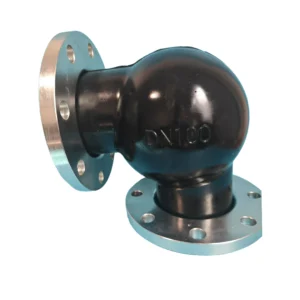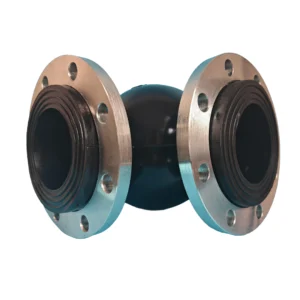
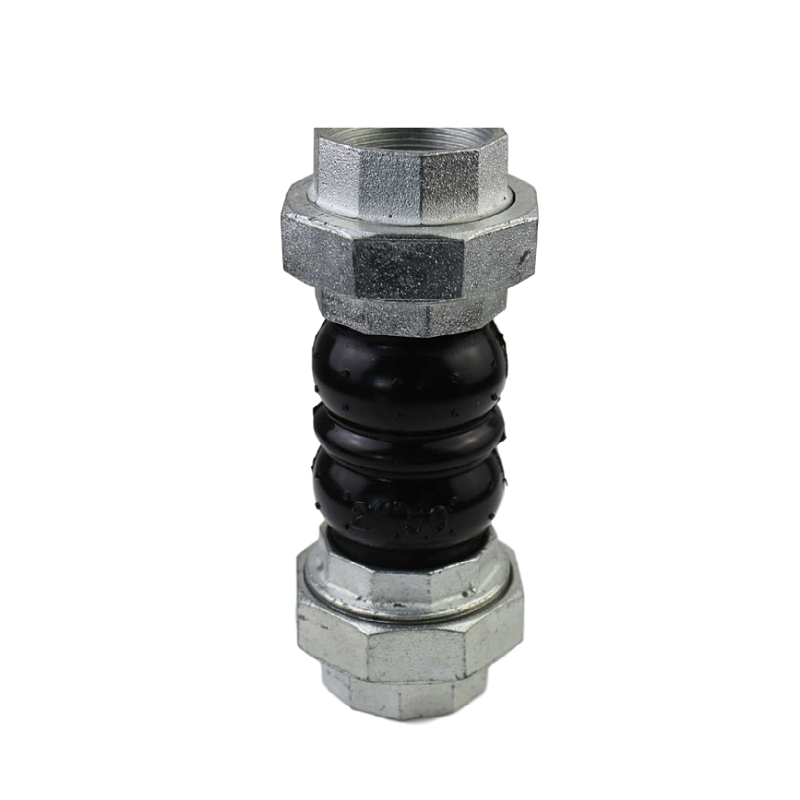
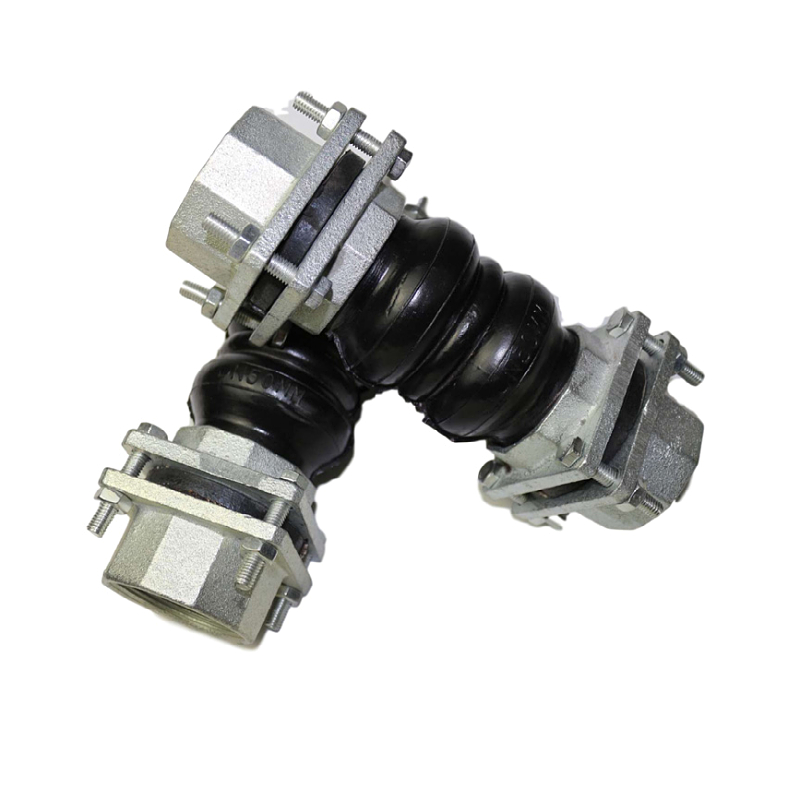
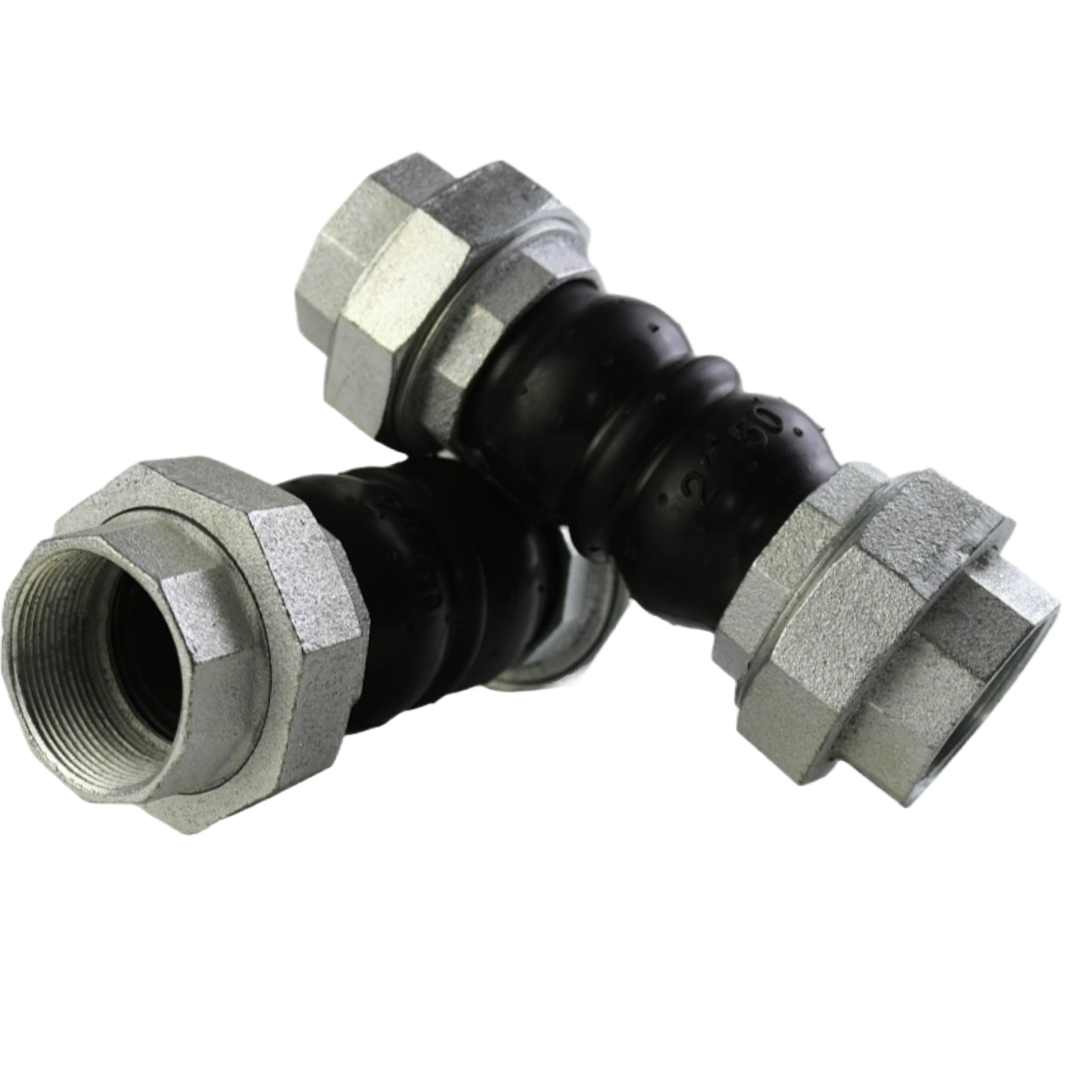
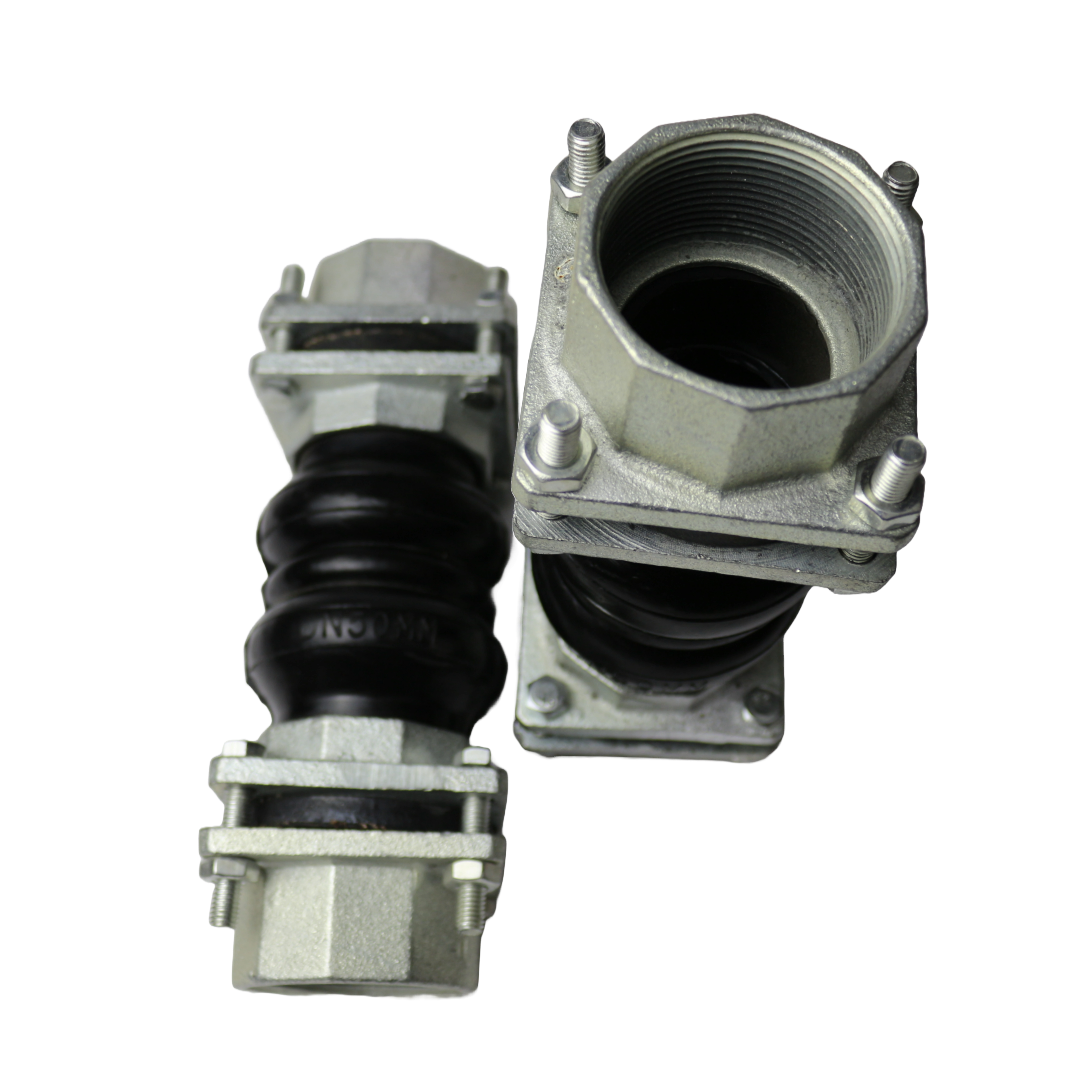
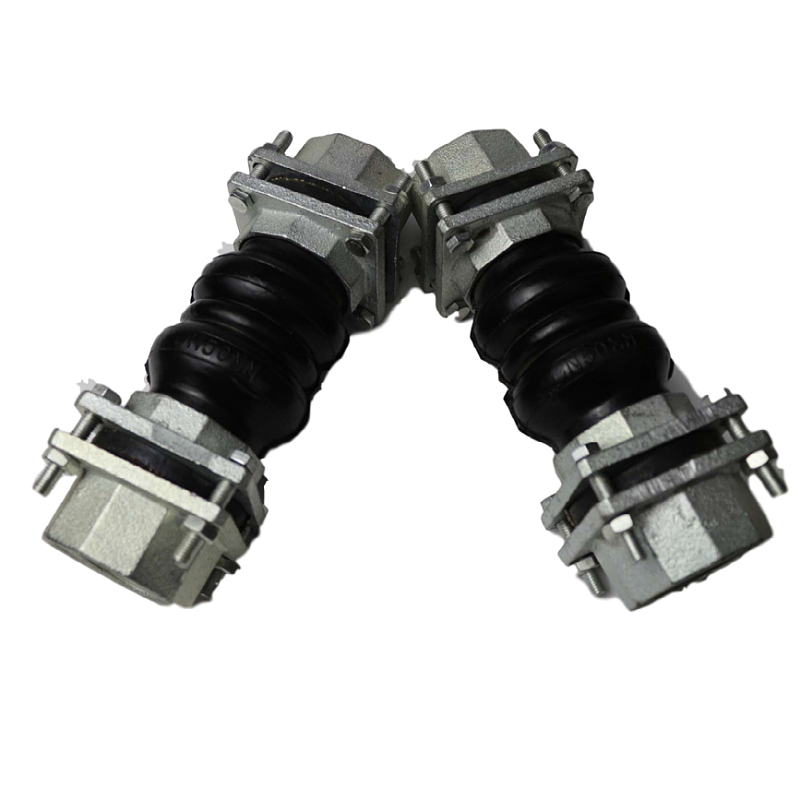
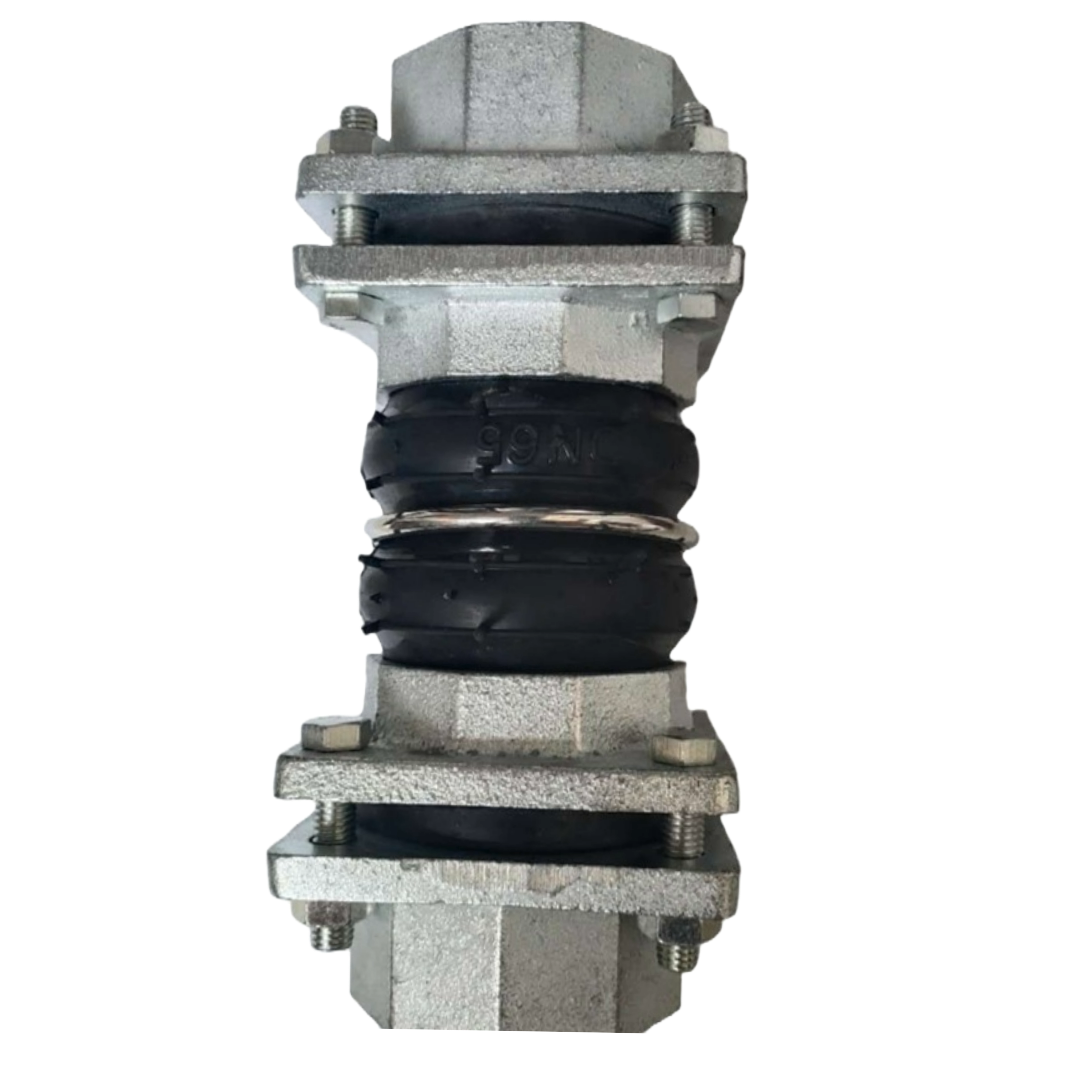
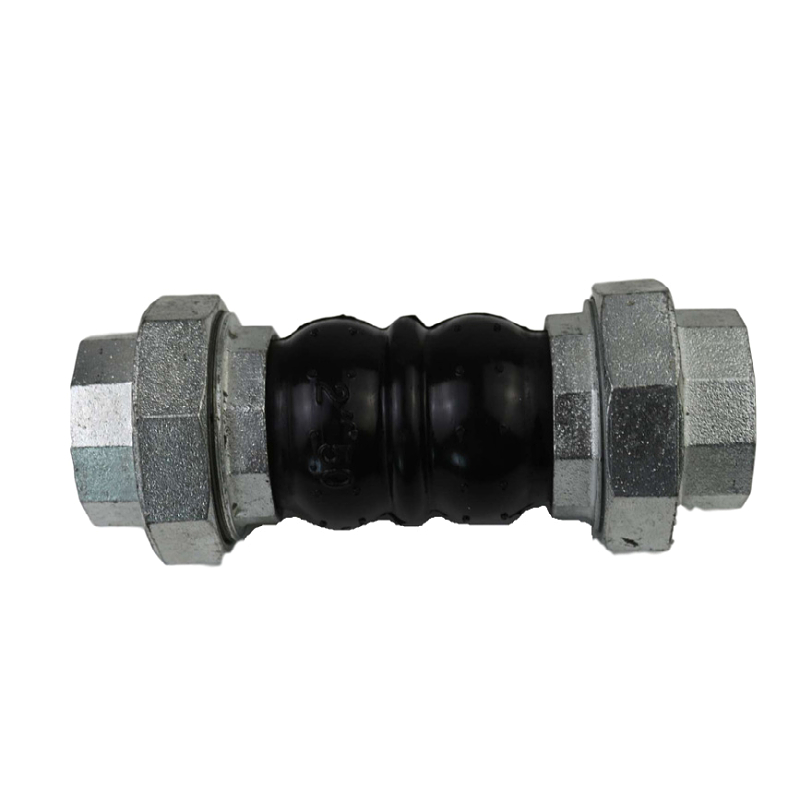
Threaded Rubber Expansion Joint
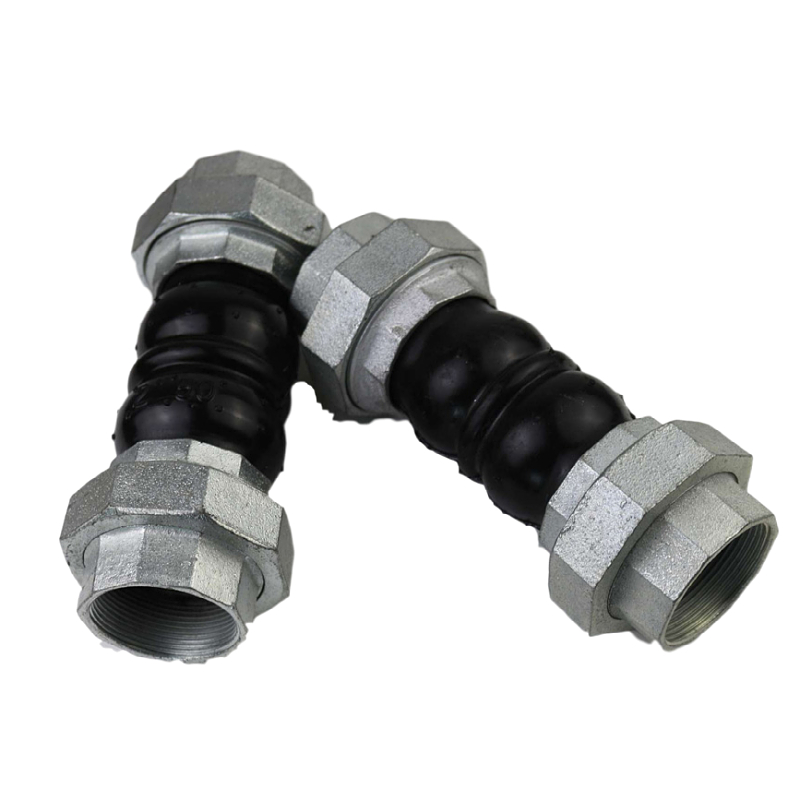
Hongze Threaded Rubber Expansion Joint is a compact flexible pipe connector designed for small-diameter piping systems that require vibration isolation, noise reduction and limited movement compensation. Threaded union ends allow installation without separate pipe flanges, making the connector suitable for equipment rooms, building services, HVAC systems, water pipelines and compact pump connections.
The reinforced rubber body can absorb axial extension, axial compression, lateral displacement and angular deflection. It also helps reduce vibration and mechanical loads transferred between pumps, valves, meters, equipment and connected piping.
Standard sizes range from DN15 to DN80 / 1/2 to 3 inches. EPDM, NBR and natural rubber options are available for different media. NPT, BSPT and BSPP thread requirements, connection material, pressure, temperature and installation length must be confirmed before production.
Key Features and Benefits
- Compact alternative to a flanged rubber expansion joint for small-diameter piping.
- Threaded union ends simplify installation, removal and equipment maintenance.
- Absorbs vibration generated by pumps, compressors and mechanical equipment.
- Reduces structure-borne noise transmitted through rigid pipework.
- Compensates limited axial, lateral and angular pipeline movement.
- Helps protect pumps, valves, meters and connected equipment from mechanical stress.
- Available from DN15 to DN80 based on the standard dimensional range.
- Standard catalog working pressure up to 1.6 MPa, subject to size, temperature and application confirmation.
- Available with EPDM, NBR or natural rubber body materials.
- NPT, BSPT, BSPP and project-specific thread requirements can be evaluated.
- Malleable cast iron union ends are standard; other connection materials may be discussed.
- Easy to remove for inspection or replacement without dismantling a long pipe section.
General Product Specifications
| Specification | Standard or Available Option |
|---|---|
| Product name | Threaded Rubber Expansion Joint |
| Alternative names | Threaded Rubber Joint, Screwed Rubber Connector, Union Rubber Expansion Joint |
| Size range | DN15-DN80 / 1/2-3 inches |
| Connection | Threaded union ends |
| Thread options | NPT, BSPT, BSPP or customer-specified pipe thread |
| Standard working pressure | Up to 1.6 MPa / 16 bar under confirmed service conditions |
| Burst-pressure reference | 4.8 MPa catalog reference; not a permitted operating pressure |
| Vacuum reference | 53.3 kPa / 400 mmHg; actual suitability requires confirmation |
| Standard temperature reference | -15°C to +115°C depending on rubber material, medium and pressure |
| Special temperature construction | Special designs may be evaluated outside the standard range; factory confirmation is required |
| Rubber materials | EPDM, NBR or Natural Rubber |
| Standard union material | Malleable cast iron |
| Reinforcement | Nylon cord fabric and steel-wire pressure reinforcement |
| Movement | Axial extension, axial compression, lateral displacement and angular deflection |
| Typical applications | Water, HVAC, pumps, building services and general industrial pipelines |
| Customization | Rubber material, thread type, connection material, surface finish, pressure and length |
Important: Pressure, vacuum, temperature and movement ratings are interdependent. The allowable rating may decrease with elevated temperature, aggressive media, pressure pulsation, vacuum, frequent movement or non-standard connection materials. Final performance must follow the approved Hongze technical data sheet.
Construction and Materials
| Component | Standard Material | Function |
|---|---|---|
| Inner and outer rubber | NR, NBR or EPDM | Provides media resistance, sealing, flexibility and environmental protection |
| Reinforcement carcass | Nylon cord fabric | Controls deformation and carries pressure loads |
| Pressure reinforcement | Steel wire | Reinforces the end area and improves pressure stability |
| Threaded union ends | Malleable cast iron | Connects the flexible rubber body to the threaded pipeline |
The exact number of reinforcement layers, rubber formulation and connection finish may change with size, pressure, temperature and project requirements. Other metallic connection materials should be confirmed for manufacturing feasibility and thread standard.
Technical Performance
| Technical Item | Catalog Reference |
|---|---|
| Working pressure | 1.6 MPa / 16 bar / approximately 16 kgf/cm² |
| Burst pressure | 4.8 MPa / approximately 48 kgf/cm² reference value |
| Vacuum | 53.3 kPa / 400 mmHg reference value |
| Angular deflection | Up to 45° catalog reference |
| Standard temperature | -15°C to +115°C, depending on selected rubber and medium |
| Special temperature | The source catalog mentions special construction from approximately -30°C to +250°C; this is not available for every rubber, size, thread or pressure condition and requires written factory confirmation |
| Media | Water, hot water, seawater, air, oil and selected chemicals when compatible with the rubber and metal connections |
Safety note: Burst pressure is not working pressure. Steam, compressed gas, severe vacuum, pressure surge, hazardous chemicals and high-cycle vibration require separate engineering review. Never operate the product at the catalog burst-pressure value.
Main Connection Dimensions
The dimensions below are standard catalog reference values. Thread standard, connection geometry and production tolerance must be confirmed before ordering. Movement values should not be combined at their maximum limits unless specifically approved.
| Nominal Diameter | Thread Size | Length L (mm) | Axial Extension (mm) | Axial Compression (mm) | Lateral Displacement (mm) | Deflection Angle |
|---|---|---|---|---|---|---|
| DN15 | 1/2 inch | 203 | 5-6 | 22 | 22 | 45° |
| DN20 | 3/4 inch | 203 | 5-6 | 22 | 22 | 45° |
| DN25 | 1 inch | 203 | 5-6 | 22 | 22 | 45° |
| DN32 | 1-1/4 inch | 203 | 5-6 | 22 | 22 | 45° |
| DN40 | 1-1/2 inch | 203 | 5-6 | 22 | 22 | 45° |
| DN50 | 2 inch | 203 | 5-6 | 22 | 22 | 45° |
| DN65 | 2-1/2 inch | 240 / 265 | 8-10 | 24 | 24 | 45° |
| DN80 | 3 inch | 240 / 285 | 8-10 | 24 | 24 | 45° |
Dimensional note: The thread nominal size does not by itself define the thread form, taper, pitch or sealing method. State NPT, BSPT, BSPP or the exact required standard on the purchase order.
Thread Types: NPT, BSPT and BSPP
Different pipe threads can have similar nominal sizes but incompatible thread angle, pitch, taper or sealing method. NPT and BSP threads must not be mixed merely because they appear to screw together.
| Thread Type | Common Designation | Reference Standard | Sealing Principle |
|---|---|---|---|
| NPT | American tapered pipe thread | ASME B1.20.1 | Pressure-tight connection is normally made on tapered threads with a suitable thread sealant |
| BSPT | R external / Rc internal tapered pipe thread | ISO 7-1 or specified equivalent | Pressure-tight connection is made on the threads using an approved sealing method |
| BSPP | G parallel pipe thread | ISO 228-1 | The parallel thread normally provides mechanical engagement; sealing requires a gasket, bonded washer, O-ring or designed sealing face |
For replacement projects, provide clear photographs, thread gauge results or the existing fitting specification. “One-inch thread” is not enough information to guarantee interchangeability.
Rubber Material Selection
| Rubber Material | Typical Applications | Main Characteristics | Selection Note |
|---|---|---|---|
| EPDM | Water, hot water, air, seawater and many water-based media | Good weather, ozone and hot-water resistance | Generally unsuitable for petroleum oils and hydrocarbon fuels |
| NBR | Mineral oil, lubricating oil, fuel and oily wastewater | Good resistance to many petroleum oils | Oil composition, aromatic content and temperature must be confirmed |
| Natural Rubber / NR | Water, air and non-aggressive general service | High elasticity, vibration absorption and abrasion resistance | Not normally selected for petroleum oil, strong chemicals or severe outdoor ageing |
For acids, alkalis, chemicals, compressed air, seawater or unusual temperatures, provide the exact medium, concentration, temperature and operating cycle. A generic material name does not guarantee compatibility with every formulation or service condition.
Typical Applications
- Domestic and industrial water-supply pipelines
- HVAC chilled-water and heating-water systems
- Small pump suction and discharge connections
- Booster-pump and circulation-pump systems
- Building-services and mechanical-equipment rooms
- Cooling-water and process-water pipelines
- Water-treatment and filtration equipment
- Air-conditioning fan-coil and chiller auxiliary piping
- General industrial low-pressure pipelines
- Oil-containing media when a compatible NBR compound is selected
- Equipment connections requiring convenient threaded removal
Threaded vs. Flanged Rubber Expansion Joint
| Comparison | Threaded Rubber Expansion Joint | Flanged Rubber Expansion Joint |
|---|---|---|
| Typical size | Small diameter, normally DN15-DN80 | Small to very large diameters |
| Connection | Threaded union ends | Bolted flanges |
| Installation space | Compact | Requires flange outside diameter and bolt access |
| Installation | Convenient for threaded piping and equipment | Suitable for standard flanged piping |
| Thread compatibility | Exact NPT/BSP thread must be confirmed | Flange standard and drilling must be confirmed |
| Maintenance | Union connection allows convenient removal | Bolts must be removed around both flanges |
| Typical selection | Building services, compact pumps and small equipment | Industrial, municipal and large pipeline systems |
How to Select the Correct Threaded Rubber Expansion Joint
- Confirm the pipe size: Provide DN size and nominal inch size.
- Confirm the thread: State NPT, BSPT, BSPP or provide the exact standard and male/female requirement.
- Confirm the medium: Provide the fluid or gas name, concentration and whether oil or solids are present.
- Confirm the temperature: State minimum, normal and maximum working temperature.
- Provide pressure data: State working pressure, surge pressure, test pressure and vacuum conditions.
- Select the rubber: EPDM is commonly selected for water; NBR is generally selected for oil service.
- Confirm connection material: State malleable cast iron or required alternative material and surface finish.
- Review movement: State the expected axial, lateral and angular movement.
- Review supports: Provide an installation sketch for pumps, suspended piping or unanchored systems.
- Confirm quantity and documentation: State inspection, marking, packaging and delivery requirements.
Installation Guidelines
- Verify the size, thread standard, rubber material, pressure rating and flow medium before installation.
- Confirm that both mating pipe threads match the expansion joint. Do not combine NPT and BSP threads.
- Inspect the rubber body and metal connections for transportation damage, corrosion or contamination.
- Clean the mating threads and remove burrs that could damage the connection.
- Apply only a thread sealant or PTFE tape compatible with the medium, temperature and plant procedure.
- Use a wrench on the metal connection flats. Do not rotate or twist the rubber body to tighten the pipe thread.
- Install the pipe-side threaded pieces first where the union design permits, then assemble the union without forcing misalignment.
- Do not over-tighten the threaded or union connection. Excessive torque may crack the metal fitting or distort the rubber body.
- Align and support the pipeline independently. The expansion joint must not carry pipe or equipment weight.
- Do not pre-stretch, over-compress or use the joint to correct serious piping offset.
- Provide suitable anchors and guides to control pressure thrust and pipe movement.
- Keep welding, grinding sparks, flames, sharp tools and incompatible solvents away from the rubber.
- Pressure-test the system gradually and keep personnel clear during initial pressurization.
- After commissioning, inspect for thread leakage, union leakage, abnormal movement and rubber deformation.
Compressed Air and Gas Service
Compressed gases store substantially more energy than liquids. Although the source catalog lists air and compressed air among possible media, gas service must not be treated as equivalent to ordinary water service. Provide the gas type, maximum pressure, temperature, installation location, pressure cycling and applicable safety requirements for engineering review.
Do not use the product with hazardous gas, oxygen service or other high-consequence compressed media unless the complete assembly, rubber compound, threaded connections and installation have been specifically approved for that service.
Inspection and Maintenance
- Inspect periodically for leakage at both threaded ends and union connections.
- Check the rubber body for cracking, swelling, hardening, blistering, abrasion or exposed reinforcement.
- Investigate abnormal vibration, movement or noise before continuing operation.
- Confirm that the pipeline supports and anchors remain secure.
- Replace the joint if permanent deformation, rubber deterioration or metal-connection damage is found.
- Do not repair a pressure-containing rubber body with temporary adhesive, tape or wrapping.
- Depressurize, drain and isolate the pipeline completely before removal.
- Store spare products in a cool, dry and dark indoor location away from ozone, oil and solvents.
Customized Manufacturing Options
- EPDM, NBR or natural rubber body
- NPT, BSPT, BSPP or project-specified pipe threads
- Different connection materials subject to feasibility
- Connection coating or surface-finish requirements
- Special face-to-face length
- Special reinforcement for pressure or vacuum service
- Customer marking, labels and packaging
- Dimensional inspection, pressure test and agreed technical documentation
Why Choose Hongze Pipe?
Hongze Pipe supplies rubber expansion joints for water, HVAC, pump and industrial pipeline systems. Our team can help customers confirm the thread standard, pipe size, rubber material, pressure, temperature and installation length before production.
For replacement projects, customers can send photographs, existing thread specifications and installation dimensions. Confirming the exact NPT or BSP thread before manufacturing helps prevent connection mismatch, leakage and installation delays.
Frequently Asked Questions
What is a threaded rubber expansion joint?
It is a flexible rubber connector with threaded union ends. It is used in small-diameter pipelines to absorb vibration, reduce noise and compensate limited axial, lateral and angular movement.
What sizes are available?
The standard catalog range is DN15 to DN80, corresponding to nominal thread sizes from 1/2 to 3 inches.
What is the standard working pressure?
The catalog working-pressure reference is 1.6 MPa. Actual allowable pressure depends on size, temperature, rubber material, connection material, pressure cycling and application.
Can I connect an NPT thread to a BSP thread?
No. NPT, BSPT and BSPP may have similar nominal sizes but different thread form, pitch, taper and sealing methods. Mixing them can cause thread damage or leakage.
What is the difference between BSPT and BSPP?
BSPT uses tapered pressure-tight pipe threads. BSPP uses parallel threads and normally requires a separate sealing face, gasket, O-ring or bonded washer. The correct connection design must be specified.
Which rubber is suitable for water?
EPDM is commonly selected for water, hot water, air and many water-based media. Actual temperature and water chemistry must be confirmed.
Which rubber is suitable for oil?
NBR is commonly selected for mineral oil, lubricating oil and many petroleum-based fluids. Oil type and temperature must be provided before selection.
Can it be used under vacuum?
The catalog lists a vacuum reference of 53.3 kPa or 400 mmHg. Actual vacuum suitability depends on size, reinforcement, temperature and operating cycle and must be confirmed before ordering.
Can it be installed directly next to a pump?
Yes, it is often used near small pumps for vibration isolation. However, the pipe must be aligned and independently supported, and the system must have suitable anchors and guides.
What information is required for a quotation?
Please provide DN size, thread size and standard, working pressure, test pressure, medium, temperature, rubber material, connection material, required length, quantity and installation photographs or drawings.
Related Rubber Expansion Joint Products
- Rubber Expansion Joint Product Category
- Single Sphere Rubber Expansion Joint
- Double Sphere Rubber Expansion Joint
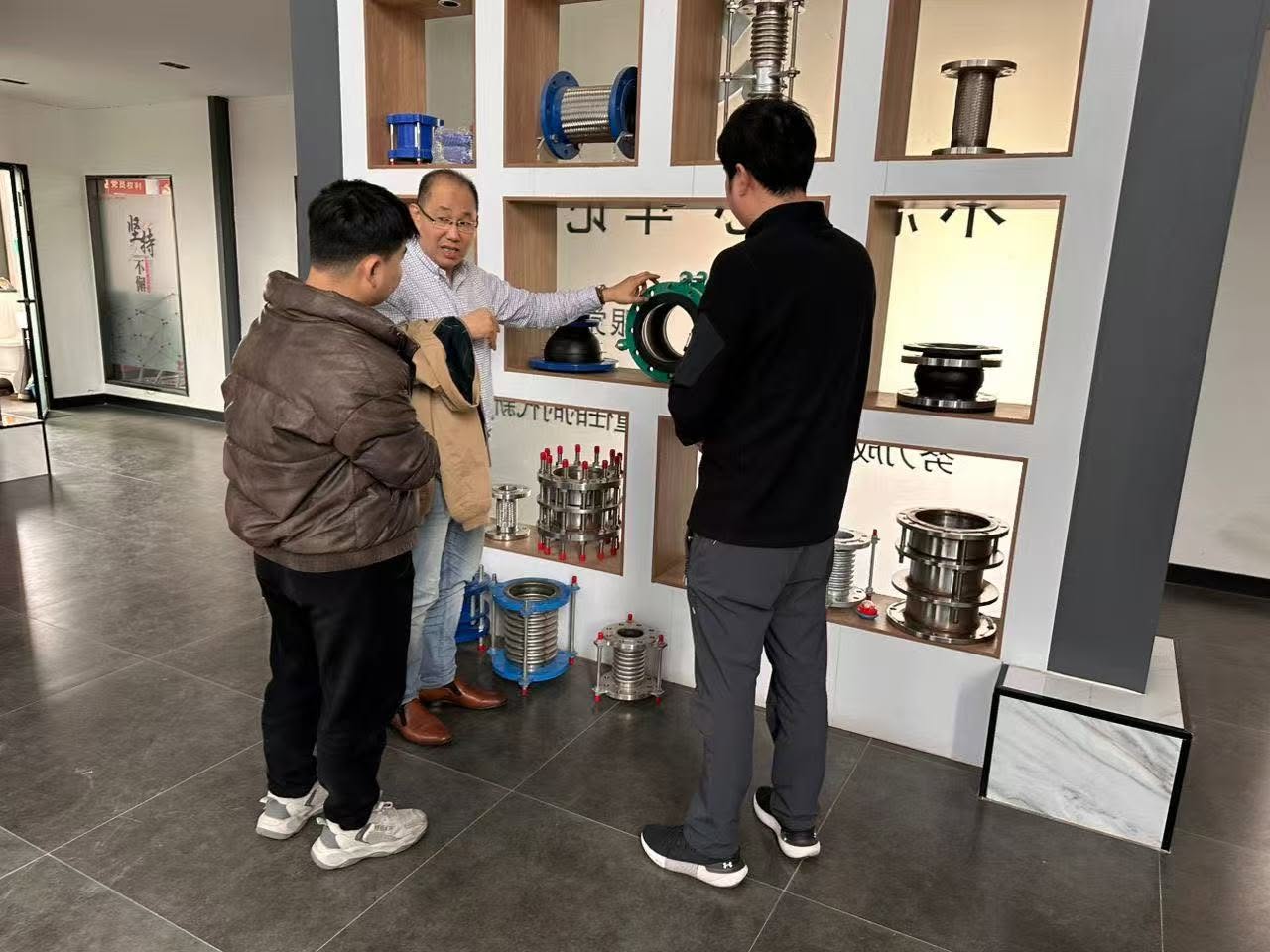
Product and Factory Information


Request a Quote
Send your DN size, thread size and standard, pressure, medium, temperature, rubber material, connection material, required length and quantity to Hongze Pipe. Our team will help confirm a suitable threaded rubber expansion joint for your pipeline.