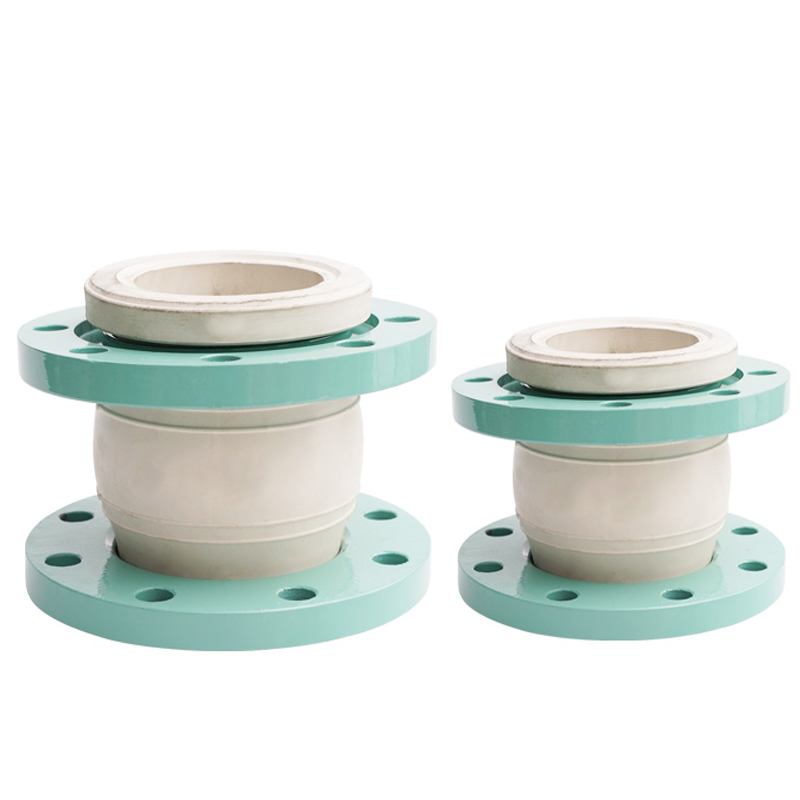
Food Grade Rubber Expansion Joint
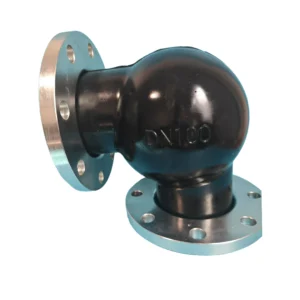
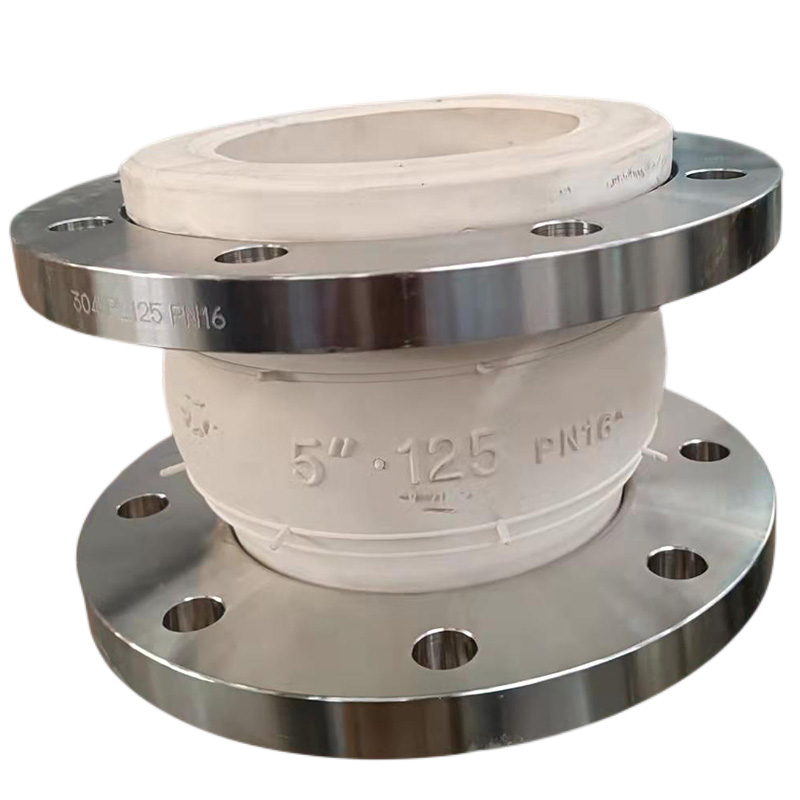
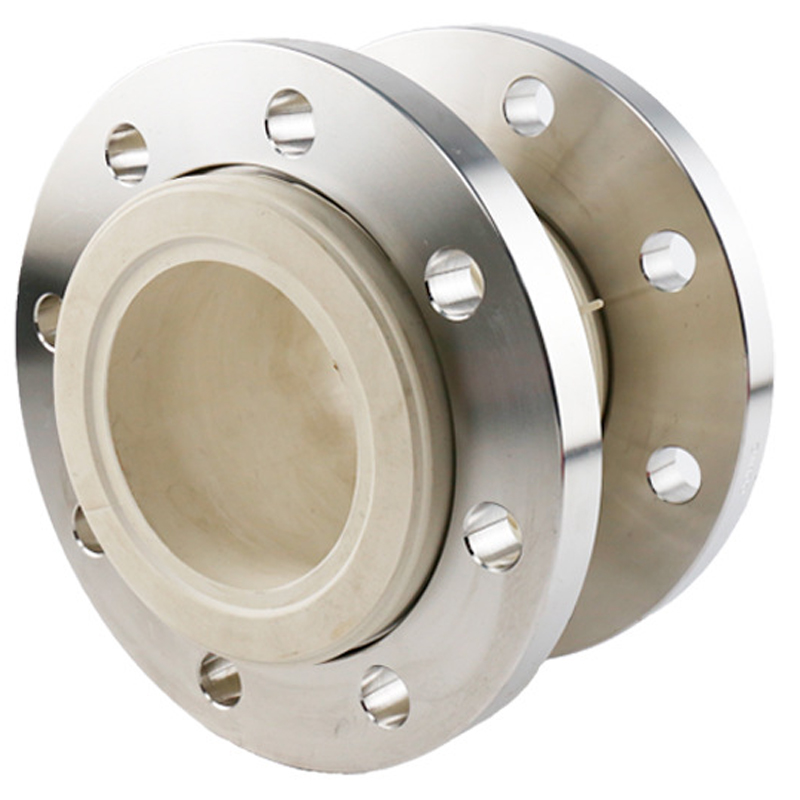
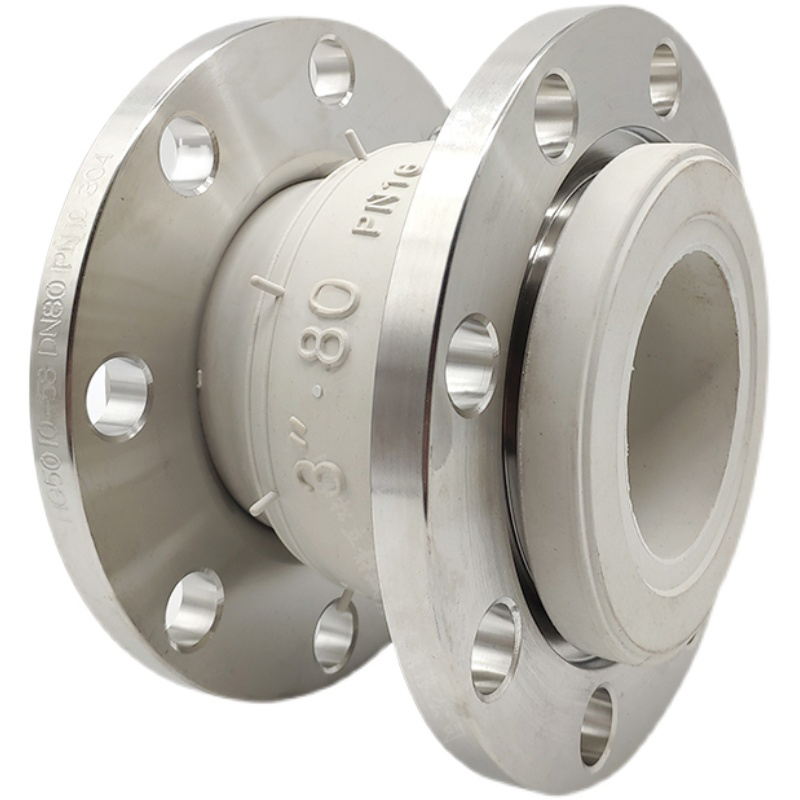
Hongze Food Grade Rubber Expansion Joint is a flexible flanged pipeline connector designed for food, beverage, dairy, purified-water, pharmaceutical and other hygienic processing systems. When manufactured with a documented food-contact elastomer, the wetted rubber surface can be selected to meet the intended product, cleaning process, temperature and regulatory requirements.
The flexible rubber body helps absorb pump and equipment vibration, reduce structure-borne noise and compensate axial, lateral and angular pipeline movement. It can also reduce loads transferred to pumps, valves, heat exchangers and connected pipework.
Food-grade suitability must be based on the complete service conditions. Hongze can supply food-contact EPDM, silicone/VMQ, NBR or other verified compounds, together with stainless steel 304 or 316L flange options and project-specific documentation. The compound, certification requirement, food type, cleaning chemicals and maximum cleaning temperature must be confirmed before production.
Key Features and Benefits
- Designed for food, beverage, dairy, purified-water and selected pharmaceutical pipeline applications.
- Available with documented food-contact rubber compounds when specified in the order.
- Absorbs vibration generated by pumps, mixers, chillers and processing equipment.
- Reduces noise transmission through pipelines and supporting structures.
- Compensates axial extension, axial compression, lateral displacement and angular deflection.
- Helps protect pumps, valves, meters, heat exchangers and connected piping from mechanical stress.
- Available in food-contact EPDM, silicone/VMQ, food-contact NBR and selected FKM compounds.
- Stainless steel 304 and stainless steel 316L flange options are available for hygienic environments.
- Flange drilling can be manufactured according to ASME/ANSI, EN, DIN, JIS, BS, GB or project drawings.
- Available from DN32 to DN1200 based on the standard dimension range.
- Special face-to-face length, reinforcement, flange material and marking can be evaluated.
- Material declarations, test reports and batch traceability can be supplied when agreed before production.
General Product Specifications
| Specification | Available Option |
|---|---|
| Product name | Food Grade Rubber Expansion Joint |
| Alternative names | Sanitary Rubber Expansion Joint, Food Grade Flexible Connector, Hygienic Rubber Joint |
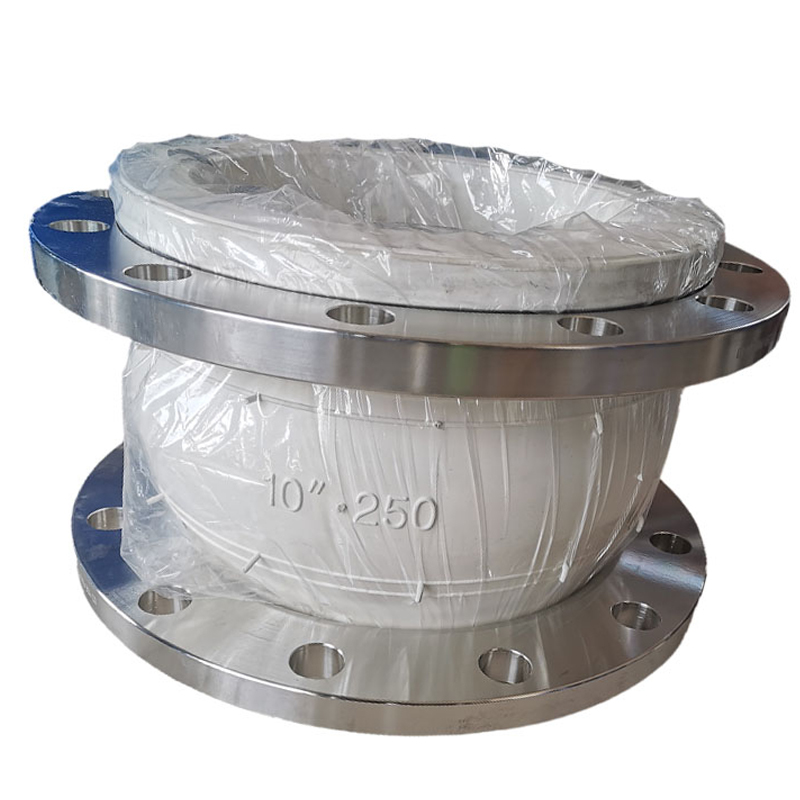
| Standard structure | Single-sphere flexible rubber body with flanged ends |
| Nominal diameter | DN32-DN1200 / 1.25-48 inches |
| Connection | Flanged ends; special hygienic connections may be evaluated |
| Food-contact elastomers | EPDM, silicone/VMQ, NBR or FKM subject to compound documentation and intended use |
| Flange materials | Stainless steel 304, stainless steel 316L or other project-specified material |
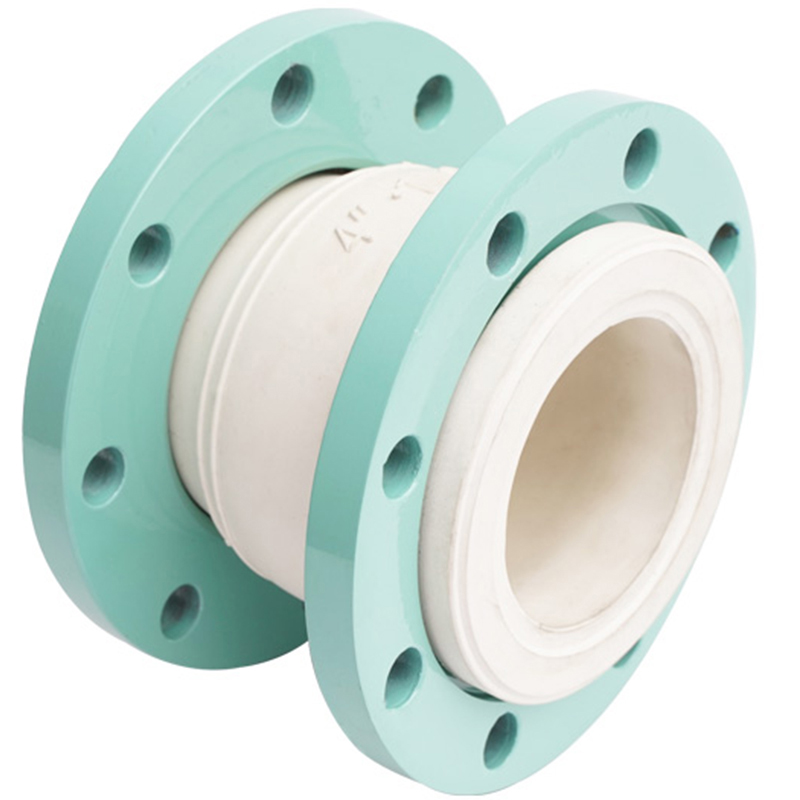
| Utility-line flange options | Carbon steel, coated carbon steel or galvanized steel for suitable non-product-contact service |
| Flange standards | ASME/ANSI, EN, DIN, JIS, BS, GB, HG or customized drilling |
| Working pressure | Selected according to size, construction, flange rating, temperature and required documentation |
| Vacuum service | Reinforced construction may be available; actual vacuum level must be specified |
| Working temperature | Determined by the selected food-contact compound, medium and cleaning cycle |
| Movement | Axial extension, axial compression, lateral displacement and angular deflection |
| Rubber color | White, blue, black or other available color; color alone does not prove food-contact compliance |
| Documentation | Material declaration, food-contact statement, inspection record and traceability documents when specified |
| Customization | Rubber compound, flange material, flange drilling, length, reinforcement, marking and packaging |
Food-Contact Compliance and Documentation
A food grade rubber expansion joint should not be selected only by product name or rubber color. Compliance applies to a specific compound, finished contact surface, intended food type, contact time, temperature and cleaning process. Required declarations and test reports must therefore be stated before ordering.
| Requirement | What It Covers | Ordering Note |
|---|---|---|
| FDA 21 CFR 177.2600 | Rubber articles intended for repeated food contact under the conditions stated in the regulation | Specify the food type, temperature and required supporting declaration or test report. Use “FDA-compliant compound,” not “FDA-approved product,” unless a specific approval exists. |
| Regulation (EC) No 1935/2004 | General EU framework for materials and articles intended to contact food | Compliance documentation must match the actual material, intended use and traceability requirements. |
| Pharmaceutical material requirement | Project-specific requirements such as USP Class VI or other customer specifications | Not included as standard. Confirm availability for the selected compound before quotation. |
| Batch traceability | Links the supplied rubber compound or finished product to production and inspection records | State the required certificate format, marking and retention period before production. |
| Hygienic equipment certification | Specific third-party certification for complete hygienic equipment designs | Not automatically included with a food-contact rubber compound. Any 3-A, EHEDG or equivalent claim requires a product-specific certificate. |
Important: A compliant rubber compound does not automatically make every assembled expansion joint suitable for every food or pharmaceutical process. The complete wetted construction, flanges, reinforcement, manufacturing method, cleaning procedure and documentation must be reviewed for the intended application.
Food Grade Rubber Material Selection
| Elastomer | Typical Service | Main Advantages | Important Limitation |
|---|---|---|---|
| Food-Contact EPDM | Water, hot water, dairy utilities, beverage lines and many water-based foods | Good resistance to hot water, weathering, ozone and many alkaline cleaning solutions | Generally unsuitable for petroleum oils, fats and hydrocarbon fuels |
| Food-Contact Silicone / VMQ | Purified water, beverage, dairy, pharmaceutical and temperature-sensitive hygienic service | Wide temperature capability, low odor and availability in translucent or light colors | Mechanical strength and pressure capability must be checked; tearing and abrasion require attention |
| Food-Contact NBR | Edible oils, animal or vegetable fats and selected oily food products | Better resistance to oils and fats than standard EPDM | Food-contact grade and extraction limits must be documented for the intended use |
| Food-Contact FKM | Selected oils, flavoring compounds, chemicals and higher-temperature processes | Improved resistance to many oils, chemicals and elevated temperatures | Higher cost and limited compound certification availability; chemical compatibility must be confirmed |
Please provide the exact food or process medium, fat content, alcohol concentration, acidity, cleaning chemical, contact time and maximum temperature. Generic descriptions such as “food liquid” or “chemical” are not sufficient for reliable material selection.
Main Connection Dimensions
The following table provides standard reference dimensions for the single-sphere flanged construction. The available length and movement values may change with pressure rating, rubber compound, flange standard, reinforcement and hygienic requirements. The final approved drawing shall control production.
| Nominal Diameter | Inch | Length L (mm) | Axial Extension (mm) | Axial Compression (mm) | Lateral Displacement (mm) | Deflection Angle |
|---|---|---|---|---|---|---|
| DN32 | 1.25 | 95 / 130 / 152 | 6 | 9 | 9 | 15° |
| DN40 | 1.5 | 95 / 130 / 152 | 6 | 10 | 9 | 15° |
| DN50 | 2 | 105 / 130 / 152 | 7 | 10 | 10 | 15° |
| DN65 | 2.5 | 115 / 130 / 152 | 7 | 13 | 11 | 15° |
| DN80 | 3 | 130 / 135 / 152 | 8 | 15 | 12 | 15° |
| DN100 | 4 | 130 / 135 / 150 | 10 | 19 | 13 | 15° |
| DN125 | 5 | 130 / 152 / 165 | 12 | 19 | 13 | 15° |
| DN150 | 6 | 130 / 152 / 180 | 12 | 20 | 14 | 15° |
| DN200 | 8 | 130 / 152 / 180 / 200 / 210 | 16 | 25 | 22 | 15° |
| DN250 | 10 | 130 / 200 / 230 / 240 | 16 | 25 | 22 | 15° |
| DN300 | 12 | 130 / 200 / 245 / 260 | 16 | 25 | 22 | 15° |
| DN350 | 14 | 200 / 255 / 265 | 16 | 25 | 22 | 15° |
| DN400 | 16 | 200 / 255 / 265 | 16 | 25 | 22 | 15° |
| DN450 | 18 | 200 / 255 / 265 | 16 | 25 | 22 | 15° |
| DN500 | 20 | 200 / 255 | 16 | 25 | 22 | 15° |
| DN600 | 24 | 200 / 260 | 16 | 25 | 22 | 15° |
| DN700 | 28 | 260 | 16 | 25 | 22 | 15° |
| DN800 | 32 | 260 | 16 | 25 | 22 | 15° |
| DN900 | 36 | 260 | 16 | 25 | 22 | 15° |
| DN1000 | 40 | 260 | 18 | 26 | 24 | 15° |
| DN1200 | 48 | 260 | 18 | 26 | 24 | 15° |
Dimensional note: These are catalog reference values, not a universal promise for every food-grade compound. Food-contact silicone, special reinforcement, high pressure, full vacuum or non-standard flange drilling may require different dimensions and movement ratings.
Hygienic Design and Cleanability Considerations
Food-contact material compliance and hygienic equipment design are related but different requirements. A food-contact rubber compound addresses the suitability of the material under stated conditions. Hygienic design also considers crevices, drainage, surface condition, cleaning access, flange geometry and the ability to inspect the wetted area.
- Confirm whether the rubber expansion joint will contact the finished product, an ingredient, process water or only a non-product utility.
- For direct product contact, use a documented food-contact inner rubber compound.
- Specify stainless steel 304 or 316L wetted metal parts where required by the process.
- Review the internal profile for drainability and the risk of product retention.
- Confirm whether the joint must be removed for inspection or manual cleaning.
- Provide CIP chemical names, concentrations, temperatures and cycle duration.
- Provide SIP temperature, steam pressure and cycle frequency where steam sterilization is required.
- Do not assume that a standard flanged rubber joint is suitable for an aseptic or high-purity pharmaceutical process.
CIP and SIP Compatibility
CIP and SIP suitability depends on the rubber compound and the complete cleaning cycle. High temperature, caustic concentration, acid concentration, oxidizing chemicals and repeated thermal cycling can change rubber hardness, swelling, compression set and service life.
| Cleaning Information Required | Why It Matters |
|---|---|
| Cleaning chemical | Determines elastomer chemical compatibility |
| Chemical concentration | Higher concentration may accelerate swelling or degradation |
| Cleaning temperature | Temperature can significantly reduce allowable pressure and service life |
| Cycle duration | Long exposure can be more severe than short intermittent cleaning |
| Cycle frequency | Repeated thermal and chemical cycling affects fatigue life |
| Rinse procedure | Residual chemicals may remain in contact with the rubber after cleaning |
| Steam sterilization data | Steam pressure and temperature require separate confirmation |
Flange Standards and Materials
Food grade rubber expansion joints can be supplied with different flange drilling patterns. Stainless steel flanges are recommended where the installation environment, washdown process or product-contact design requires improved corrosion resistance.
- ASME/ANSI B16.5 Class 150 or project-specified drilling
- EN 1092-1 PN10, PN16 or other project-specified pressure rating
- DIN PN10 or PN16 drilling
- JIS B 2220 10K or 16K drilling
- BS, GB and HG flange drilling
- Non-standard drilling according to an approved flange drawing
- Stainless steel 304 and 316L flange options
Both mating flanges should be checked for outside diameter, bolt-circle diameter, hole quantity, hole diameter, sealing face and pressure rating. Flange standard names alone may not be sufficient for non-standard or existing equipment connections.
Typical Applications
- Food-processing and ingredient-transfer pipelines
- Beverage, juice, soft-drink and bottled-water plants
- Dairy processing, milk and whey systems
- Breweries, wineries and fermentation plants
- Edible-oil and food-fat processing systems using a compatible compound
- Purified-water and process-water pipelines
- Food and beverage pump inlet or outlet connections
- Chilled-water and temperature-control utility systems
- Selected pharmaceutical and biotechnology utilities
- Cosmetic and personal-care manufacturing lines
- Clean-room utility piping where the complete design is approved
Food Grade vs. Standard Industrial Rubber Expansion Joint
| Comparison | Food Grade Rubber Expansion Joint | Standard Industrial Rubber Joint |
|---|---|---|
| Rubber compound | Selected food-contact compound with required documentation | Industrial compound selected primarily for pressure, temperature and chemical service |
| Direct food contact | Possible when the specific finished compound and application are verified | Not assumed suitable |
| Documentation | May include food-contact declaration, test data and batch traceability | Standard material and inspection documents |
| Flange recommendation | SS304 or SS316L commonly preferred for hygienic environments | Carbon steel, galvanized steel or stainless steel |
| Cleaning review | CIP/SIP chemicals, temperature and cycles must be considered | General process cleaning requirements |
| Color | May be white, blue, black or another color; documentation is decisive | Commonly black, but other colors are possible |
How to Select the Correct Food Grade Rubber Expansion Joint
- Identify the contact category: Confirm direct food contact, ingredient contact, potable water, process water or non-product utility service.
- Describe the medium: Provide the product name, ingredients, fat content, alcohol content, acidity and any suspended solids.
- Provide operating temperature: State minimum, normal and maximum product temperatures.
- Provide pressure data: State working pressure, surge pressure, test pressure and vacuum conditions.
- Describe CIP/SIP: Provide chemicals, concentrations, temperatures, duration and cleaning frequency.
- State compliance requirements: Specify FDA 21 CFR 177.2600, EU framework documentation, USP Class VI or customer-specific standards where applicable.
- Confirm the flange: Provide the flange standard, pressure class, material and sealing-face requirement.
- Confirm movement: Provide expected axial, lateral and angular movement.
- Review hygienic design: Confirm drainability, cleanability, inspection access and whether the joint contacts finished product.
- Approve the drawing: Confirm length, flange drilling and main dimensions before production.
Installation Guidelines
- Verify the diameter, food-contact compound, pressure rating, flange material and documentation before installation.
- Inspect the inner surface, outer surface and flange sealing areas for cuts, contamination or transportation damage.
- Clean the product according to the approved plant procedure before first food contact.
- Ensure the mating flanges are clean, correctly aligned and free from sharp edges.
- Do not force the expansion joint to correct serious pipe misalignment.
- Do not twist, over-extend or over-compress the rubber body during installation.
- Support the pipeline independently. The expansion joint must not carry pipe or equipment weight.
- Tighten bolts gradually and evenly in a diagonal cross pattern.
- Do not add an extra gasket unless required by the approved flange design.
- Provide suitable anchors, guides and supports to resist pressure thrust.
- For suspended water lines above DN200, use properly engineered supports and evaluate control units or anti-pull-off protection.
- Protect the rubber from welding sparks, sharp tools, oils, solvents and unapproved lubricants.
- After commissioning, inspect for leakage, abnormal movement and uneven flange compression.
Cleaning, Inspection and Maintenance
- Use only cleaning chemicals and temperatures approved for the selected food-contact compound.
- Follow the plant’s validated cleaning and sanitation procedure.
- Inspect the inner surface where accessible for swelling, cracking, discoloration, product retention or surface damage.
- Inspect the outer cover for cracking, abrasion, blistering or exposed reinforcement.
- Check flange bolts and sealing faces periodically for leakage or uneven loading.
- Replace the expansion joint if the rubber becomes hard, permanently deformed, swollen, cracked or contaminated.
- Do not use temporary adhesive repairs on a pressure-containing food-contact surface.
- Record installation date, batch information and inspection history where traceability is required.
Customized Manufacturing Options
- Food-contact EPDM, silicone/VMQ, NBR or FKM compound
- White, blue, black or other available rubber color
- Stainless steel 304 or stainless steel 316L flanges
- Customized flange drilling and flange dimensions
- Special face-to-face length
- Special reinforcement for pressure or vacuum service
- Control units or limit rods where required by the piping design
- Customer drawing and technical-data-sheet production
- Product marking, batch identification and traceability
- Material declarations, inspection reports and agreed test documentation
- Clean packaging or project-specific packaging requirements
Why Choose Hongze Pipe?
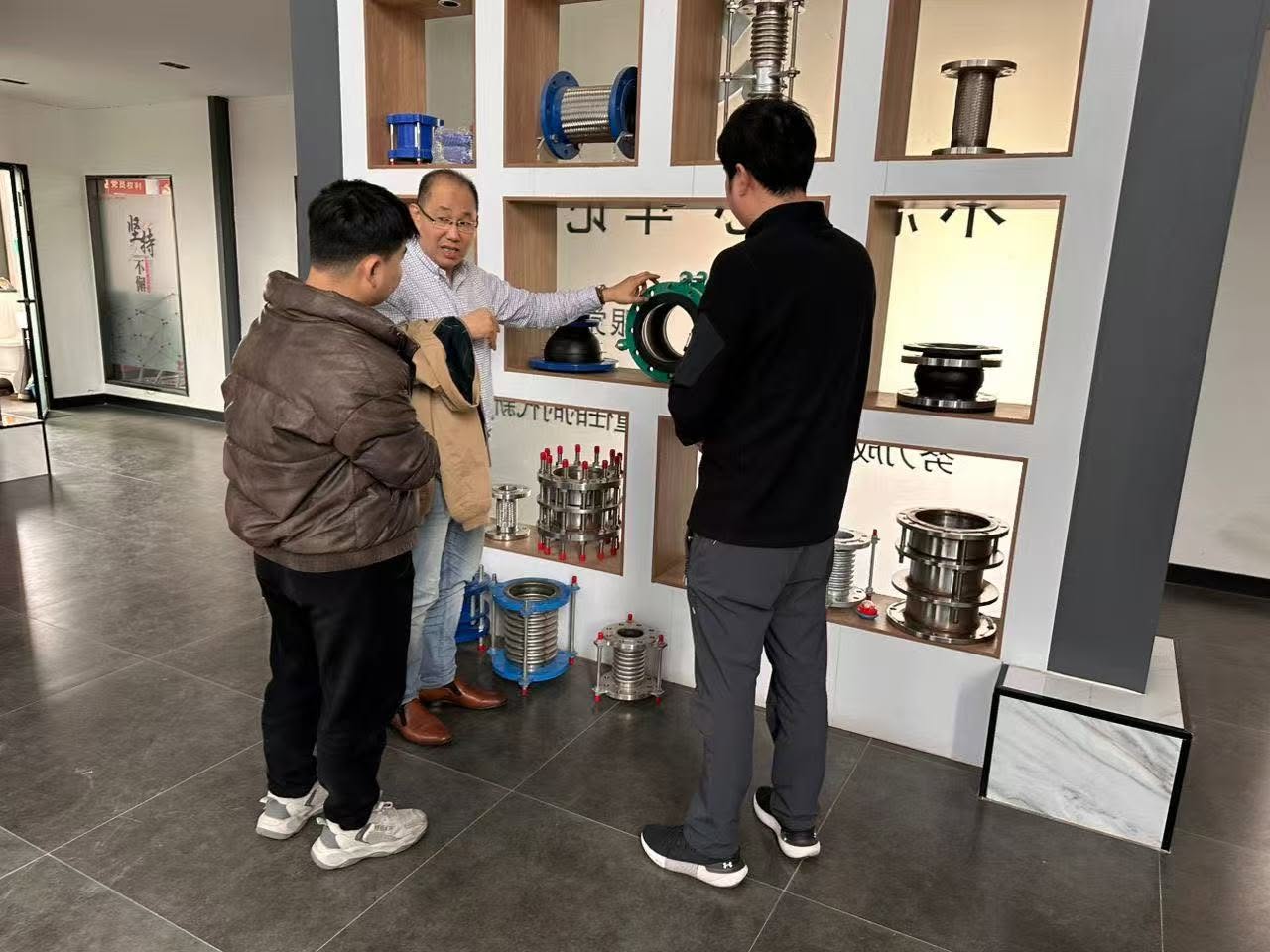
Hongze Pipe supplies standard and customized rubber expansion joints for industrial and hygienic pipeline projects. Our team can help review the working medium, cleaning process, food-contact requirement, flange standard, pressure, movement and installation length before production.
For food-grade applications, we focus on matching the actual rubber compound and documentation to the intended service rather than relying only on a generic “food grade” description. Approval drawings, material requirements and inspection documents can be confirmed before the order is released for manufacturing.
Frequently Asked Questions
What makes a rubber expansion joint food grade?
Food-grade suitability comes from a verified food-contact compound used under its documented conditions, together with suitable wetted metal parts, manufacturing control, cleaning and traceability. Product color alone does not establish compliance.
Does white rubber automatically mean food grade?
No. White, blue or black rubber can be food-contact compliant or non-compliant depending on the formulation. Compliance should be supported by documentation for the specific compound or finished contact article.
Is the product FDA approved?
FDA regulations generally define conditions for compliant food-contact materials rather than issuing a blanket approval for every finished expansion joint. Where required, Hongze can evaluate a compound compliant with FDA 21 CFR 177.2600 and provide the agreed supporting documents.
Which rubber is best for food and beverage water lines?
Food-contact EPDM is commonly selected for water, hot water and many water-based food or beverage applications. The product chemistry, temperature and cleaning process must still be confirmed.
Which rubber is suitable for edible oils and fats?
A documented food-contact NBR or selected FKM compound may be considered for oils and fats. The oil type, temperature, contact time and regulatory requirements must be provided.
Can the expansion joint be cleaned by CIP?
It may be suitable for CIP when the selected compound is compatible with the cleaning chemical, concentration, temperature and cycle duration. Complete CIP data must be reviewed before selection.
Can it be used for steam sterilization?
SIP and steam service require separate confirmation of rubber compound, steam pressure, temperature, duration, cycle frequency and reinforcement. Standard food-grade construction should not automatically be assumed suitable.
Can you provide stainless steel 316L flanges?
Yes. Stainless steel 316L flange options can be supplied according to the required drilling, pressure class and sealing-face design.
Can you provide compliance documents?
Material declarations, available food-contact statements, inspection records and traceability documents can be supplied when the exact document requirement is agreed before quotation and production.
What information is required for a quotation?
Please provide nominal diameter, working pressure, test pressure, medium, food type, fat or alcohol content, operating temperature, CIP/SIP data, flange standard, flange material, required length, movement, quantity and compliance-document requirements.
Related Rubber Expansion Joint Products
- Rubber Expansion Joint Product Category
- Single Sphere Rubber Expansion Joint
- PTFE Lined Rubber Expansion Joint
Product and Factory Information


Request a Quote
Send your pipe size, pressure, food or process medium, temperature, cleaning conditions, flange standard, flange material, required length, movement, quantity and compliance requirements to Hongze Pipe. We will help review a suitable food grade rubber expansion joint configuration for your project.